EARRINGS SVG BUNDLE: A Designer's Review for Embroidery
As a designer who spends more time staring at stitch previews than I do sleeping, I am always skeptical of "bundles" that promise the world. Usually, they are a mix of sloppy vectors and shapes that look great on a screen but turn into a thread mess on fabric. However, after spending the last week evaluating the EARRINGS SVG BUNDLE, I have to admit it caught my attention for reasons beyond just the quantity of files. This isn't just a collection of clip art; it is a versatile toolkit for anyone looking to bridge the gap between digital graphics and tangible, stitched products.
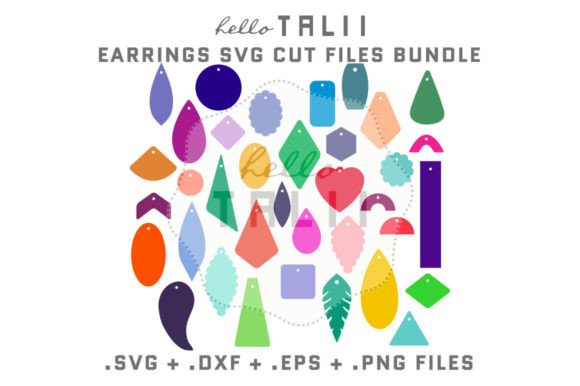
My first impression was one of clean geometry. The mood here is modern boutique meets handmade charm. The shapes range from classic hoops and teardrops to more abstract geometric forms, all rendered with crisp lines that suggest they were drawn with precision rather than auto-traced. For an embroidery designer, this initial visual clarity is crucial. It tells me that when I convert these Graphics into a machine embroidery design, the software won't struggle to interpret jagged edges or ambiguous corners.
From Vector to Stitch: Real-World Application
To truly test the EARRINGS SVG BUNDLE, I didn't just look at the files; I simulated a real client project. Imagine a local jewelry maker who wants to expand their brand into soft goods. They need a cohesive look for tote bags, aprons, and perhaps some branded sweatshirts. This bundle is perfect for that scenario because it offers 35 distinct earring shapes, each provided in three variations: one hole, two holes, and no holes.
This specific detail—the hole variations—is where the practical value shines. In a real embroidery project, you aren't just stitching a shape; you are creating a narrative. If I were designing a tote bag design for this client, I could use the "two holes" version to simulate an earring hanging from a stitched earlobe or a hook, adding a layer of whimsy that flat graphics lack. Alternatively, the "no hole" versions serve as excellent bold motifs for sweatshirt embroidery or embroidered patch creations where the focus is purely on the silhouette.
The sheer volume of over 150 files allows for endless combinations. You aren't stuck with one look. You can create a pattern repeat for a pillow cover or scatter different shapes across a kitchen towel for a playful holiday gift. The variety ensures that your handmade product doesn't look like it came from a generic template, which is vital for maintaining customer trust and brand consistency.
Navigating Fabric and Technique Challenges
While the designs are strong, a responsible reviewer must address where caution is needed. These shapes, particularly the thinner geometric styles, require careful consideration of stitch density. If you are working on a stretchy fabric like a jersey t-shirt or a textured weave like linen, a dense fill stitch might cause puckering. In these cases, I recommend converting the SVG into an applique design. By using the vector as a cut guide and covering it with fabric, you eliminate bulk while keeping the sharp aesthetic.
For those attempting baby embroidery or items that will see frequent washing, such as custom apparel for kids, pay close attention to the small details. Tiny connection points in the SVG might vanish under a satin stitch if the column width is too narrow. Always test the design on scrap fabric first. Check how the thread colors contrast against the background; a dark thread on a dark fabric texture can hide beautiful details, while high-contrast choices can make the design pop but also highlight any imperfections in registration.
Curved surfaces present another challenge. If you plan to use these on caps or hats, remember that the hoop size limitations might force you to scale down the design. When scaled down, intricate inner details could become indistinguishable blobs of thread. For headwear, stick to the simpler, bolder shapes from the bundle and ensure you are using a sturdy stabilizer to prevent the design from warping over the curve of the cap.
Commercial Viability and Branding
For Etsy sellers and owners of a small shop product line, the commercial potential of this bundle is significant. The inclusion of 9 earring display cards in the package is a thoughtful touch for digital product sellers. You can use these to create printable mockup assets or social media graphics that showcase your physical jewelry alongside your new embroidered merchandise. This creates a unified brand experience that feels professional and well-thought-out.
However, before listing finished items or design assets derived from this bundle, you must verify the licensing terms. While the description mentions commercial use potential, specifics on resale limits or attribution requirements are not always explicit in file descriptions. Confirm whether you can sell the digitized embroidery files themselves or only the finished product. This step is non-negotiable for protecting your craft business from legal headaches down the road.
Final Verdict for the Practical Maker
The EARRINGS SVG BUNDLE stands out because it understands the workflow of a creator. It acknowledges that we need options—one hole, two holes, none—to tell different stories on different canvases. Whether you are creating a personalized gift for a friend who loves statement jewelry or building a inventory of holiday embroidery items for a craft fair, these files provide a solid foundation.
Just remember: the SVG is only half the battle. The magic happens when you apply your expertise in running stitch outlines, select the right stabilizer, and choose thread that complements the fabric. Do not rely solely on default digitizing settings. Inspect small details, compare light and dark fabric backgrounds, and treat these vectors as a starting point for your creativity, not the final destination. With the right approach, this bundle can elevate your commercial embroidery offerings from standard to standout.